You are on a site where men look at men, and nobody asks your name. Less than a hundred years ago, in the middle of Europe, that alone could send you to a concentration camp. On January 27, the day Auschwitz was liberated, the world remembers the victims of the Holocaust. These men were among them, and for a long time nobody wanted to remember them.

Berlin, before
In the 1920s Berlin was one of the freest cities in the world. It had gay bars, dance halls, magazines. It also had Magnus Hirschfeld, a doctor who had spent his life saying that loving someone of your own sex was neither a sickness nor a crime. In 1919 he opened the Institute for Sexual Science, the first of its kind, and he fought for decades to repeal Paragraph 175, the law that made sex between men illegal.
1933
When the Nazis came to power, it all ended within weeks. The bars were closed, the magazines banned. On May 6, 1933, a crowd of students ransacked Hirschfeld’s Institute. Four days later its books were thrown into the great bonfire in the middle of Berlin, together with a bust of Hirschfeld. He was abroad on a lecture tour. He never came back, and died in exile two years later.
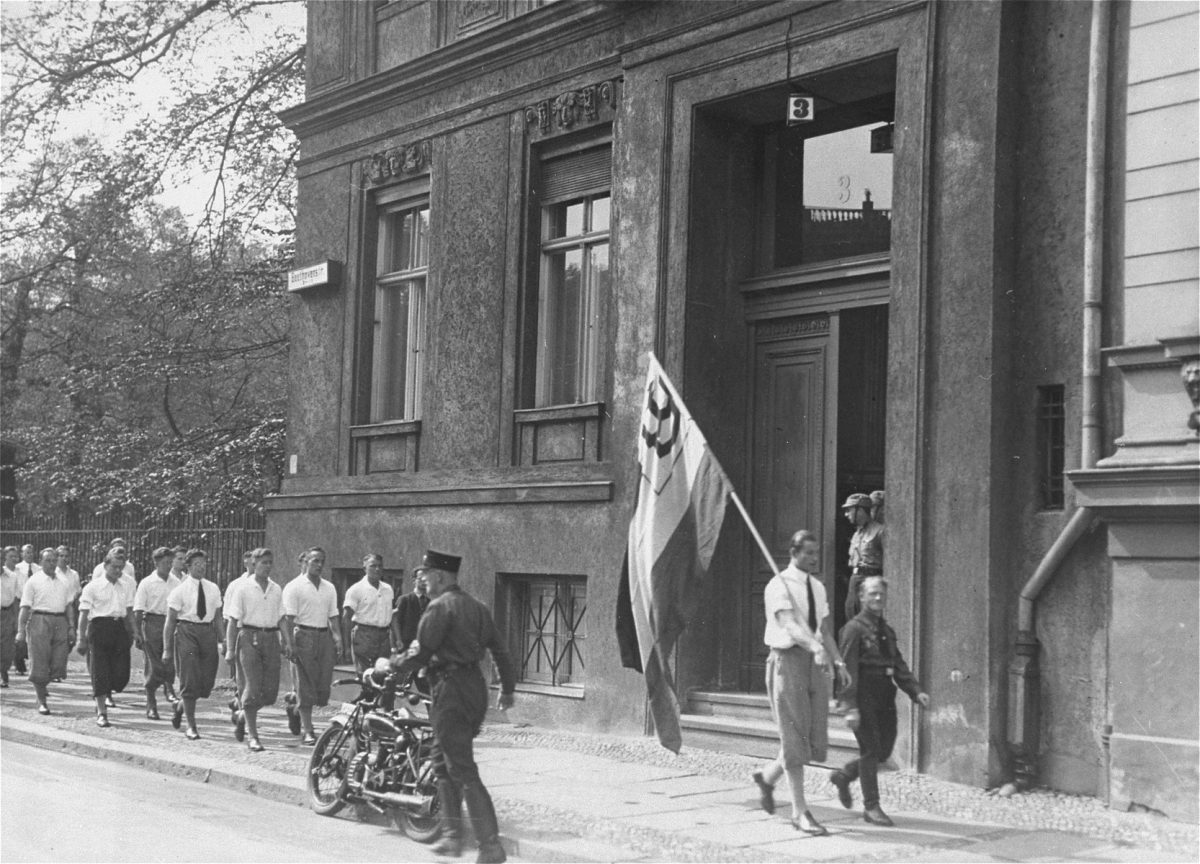

The law gets worse
In 1935 Paragraph 175 was rewritten. It no longer took sex to be convicted: a touch, a look, a letter could be enough. The police kept lists, raided apartments, made men denounce their friends. About 100,000 men were arrested, and around 50,000 were sent to prison.
The pink triangle
Between 5,000 and 15,000 men were sent to concentration camps for being gay. On their uniforms they had to wear a pink triangle. In the camps they were at the very bottom: beaten by the guards, avoided by the other prisoners, given the hardest and most dangerous work. Historians estimate that up to 60% of them died.
A liberation that wasn’t
In 1945 the camps were freed. For the men with the pink triangle, the nightmare didn’t end. West Germany kept Paragraph 175 exactly as the Nazis had written it, and some survivors were sent back to prison to finish their sentences. They got no compensation, no apology, and most of them never spoke about it again, not even to their families. Berlin’s memorial plaque says it in two words: totgeschlagen, totgeschwiegen. Beaten to death, silenced to death.
Rudolf
Rudolf Brazda was convicted twice for loving men. In 1942 he was deported to Buchenwald, prisoner number 7952, with a pink triangle on his chest, and spent almost three years doing forced labor there. He survived. After the war he moved to France and lived for more than fifty years with his partner, Edi. He only told his story when he was in his nineties. When he died in 2011, at 98, he was the last known survivor deported for being gay.


From then to now
-
1872
Paragraph 175
The new German criminal code makes sex between men a crime.
-
1897
The first gay rights group
In Berlin, Magnus Hirschfeld founds the first organization in the world to fight for homosexual rights.
-
1919
The Institute
Hirschfeld opens the Institute for Sexual Science in Berlin.
-
1933
The end of an era
The Nazis take power. Gay bars and magazines are shut down, the Institute is ransacked and its books burned.
-
1935
A harsher law
Paragraph 175 is rewritten: any “lewd” act between men is now a crime.
-
1936
The lists
Himmler sets up a national office to hunt down homosexuals.
-
1945
Liberation
The camps are freed. For the men with the pink triangle, the law stays exactly the same.
-
1969
The first reform
West Germany finally stops punishing sex between adult men.
-
1985
Named at last
President Richard von Weizsäcker mentions murdered homosexuals among the victims of Nazism: the first German head of state to do so.
-
1987
The Homomonument
Amsterdam opens the first monument in the world to gay men and lesbians persecuted for who they were.
-
1994
Gone for good
Paragraph 175 disappears from German law, after 122 years.
-
2002
Convictions cancelled
The German parliament annuls the Nazi convictions for homosexuality.
-
2008
A memorial in Berlin
A memorial to the persecuted homosexuals opens in the Tiergarten, across the road from the Holocaust memorial.
-
2011
The last witness
Rudolf Brazda dies at 98, the last known survivor deported for being gay.
-
2017
An apology, finally
Germany cancels the post-war convictions too and offers compensation to the men still alive.
-
2023
Remembered
For the first time, the German parliament dedicates its Holocaust Remembrance Day ceremony to queer victims.
Why we remember
Years later, the gay movement took back the pink triangle. Activists turned it upside down and made it a symbol of pride and resistance: the badge meant to mark them for death became a way of saying we are still here.
The freedom we enjoy today, including the freedom to be on a site like this one, was not always there, and it is not there everywhere. On January 27, remember them too.