The creator economy, when the men in the pictures took the camera
From 2016 gay porn moved from the studios to the performers' own phones, sold by subscription on OnlyFans and JustFor.Fans and advertised on Twitter, while PrEP and U=U made the condom vanish from the screen. Then banks, newspapers and governments pushed back, and the question became not what could be filmed but who is allowed to look.

Washington, 27 June 2025, the last day of the Supreme Court's term. Among the opinions released that morning is one about a Texas law, House Bill 1181, which orders websites made largely of sexual material to check the age of every visitor. By six votes to three, in an opinion written by Justice Clarence Thomas, the Court rules that the law is constitutional because it "only incidentally burdens the protected speech of adults"1.
For a century the fight over pornography had been about what could be made and sold. This decision was about something else: who is allowed to look, and what they must show at the door. It came at the end of ten years in which gay porn changed hands, from studios to the performers themselves, filming on their own phones and selling to their own followers. This chapter tells how that happened, and how banks, newspapers and governments answered.
A website for fans
OnlyFans went online in London in November 2016. Its founder, Tim Stokely, started it with about £10,000 from his father, and it was not designed for porn. The idea was simple: anyone with an audience could put photos and videos behind a monthly subscription, and the site kept a cut of 20 per cent.
Sex workers understood the model at once. Within a year explicit material was allowed, and in 2018 a company controlled by Leonid Radvinsky, an American businessman already in the adult web trade, bought the majority of the business. He owned it until he died of cancer in March 2026, aged 43.
Gay performers got a platform of their own. JustFor.Fans opened on Valentine's Day 2018, founded by Dominic Ford, the professional name of the owner of a small gay porn studio, who wanted a site built around performers rather than influencers. In six months it had more than 130,000 subscribers and over 2,000 models, according to a report in Out magazine that autumn2.
Ford explained the shift in one sentence: "There's definitely been a trend over the last eight years of consumers liking more amateur movies." Rocco Steele, a veteran studio performer interviewed for the same piece, said his fan site paid "unbelievably more" than studio work ever had2.
The shop window is free
A subscription site is a shop with no street. Nobody finds it by chance. What creators needed was a window, and for gay porn that window was Twitter.
The recipe became standard within a couple of years. Post short clips and photos for free, build a following, put a link in the profile, sell the full videos behind it. Twitter had long tolerated adult material on accounts marked as sensitive, and it became the main public square of gay porn, where fans, performers and studios all met.
Other doors were closing. In April 2018 the United States passed FOSTA-SESTA, a law that made websites liable for content that promoted prostitution; Craigslist shut its personal ads as soon as Congress had voted it through. In December 2018 Tumblr, home to thousands of gay erotic blogs, banned adult images altogether after its app was pulled from Apple's store. Their users went looking for a new home, and Twitter was the obvious one.
After Elon Musk bought Twitter in 2022 and renamed it X, the rules on consensual adult content stayed, as long as it was labelled. For gay creators that single platform remained the place where most new fans first saw them.

Collabs
A solo creator can only sell so many videos of himself. The answer was the collab: two or more creators film together, each posts the scene to his own page, and each introduces his followers to the other. A good collab could double an audience in a weekend.
It changed the shape of gay porn. Studios used to cast men, pair them and choose the scene. Now the performers chose their partners, often other creators they knew online, and the scene was planned by direct message.
It also widened who was in front of the camera. In 2020 the magazine Dazed interviewed straight men, a construction worker, an electrician, a former soldier, who sold explicit content mostly to gay men on OnlyFans and JustFor.Fans and saw it as work like any other. "I used to have a wank and wouldn't get paid for it, and now, I get paid for it", one of them said3.
The freedom had a price. With no producer there was also no one in charge of testing, contracts, ID checks for partners or safety on set, and some creators began to talk publicly about setting their own rules for shoots.
What happened to the studios
The studios did not vanish, but they shrank and merged. Many of the old names already belonged to a few large owners. Falcon, the company that had defined gay porn since the 1970s, had been bought by the streaming group AEBN in 2010 and later traded together with NakedSword. Sean Cody had been sold in 2015 to MindGeek, the company behind Pornhub and already the owner of Men.com, renamed Aylo in 2023.
What the studios lost was control of the stars. A performer with half a million followers did not need a studio to be seen, and could earn more in a month on his own page than from a contract. Many studios adapted by hiring creators who already had an audience, filming scenes with them and sharing the publicity.
The relationship flipped. In the studio age a contract made a man famous. Now a man came to a studio already famous, and the studio scene was one more product to promote on his own channels.
A pill, then an equation
At the same time something changed in the scenes themselves: the condom disappeared.
In July 2012 the American drug agency approved Truvada as PrEP, a daily pill that protects HIV-negative people from infection. In December 2013 Lucas Entertainment, one of the biggest New York studios, began releasing scenes without condoms. Its owner, Michael Lucas, said he had held out as long as he could, but that "with the arrival of PrEP and the new information about undetectable viral loads, the principle behind holding out was not as compelling as it used to be"4.
That new information became a slogan in 2016. The Prevention Access Campaign, founded in New York by people living with HIV, launched "Undetectable = Untransmittable", or U=U: a person whose treatment keeps the virus undetectable does not pass it on through sex. The American Centers for Disease Control backed the science in 2017.
The strongest evidence came from gay men. The PARTNER study, published in The Lancet in 2019, followed 782 male couples in which one partner was HIV-positive and on effective treatment. Over tens of thousands of acts of sex without condoms, it found not a single transmission between partners5.
For gay porn, this closed a story that began in the AIDS years, when the condom on screen had been a lesson in survival. By 2019 the online magazine Slate reported that only two American studios still used condoms in every scene6. Bareback was no longer a niche. It was the norm.
The column that moved the banks
On 4 December 2020 the New York Times published a long opinion piece by Nicholas Kristof, "The Children of Pornhub". It told the stories of girls and young women whose abuse had been filmed and uploaded to the site, and argued that the platform made money from rape videos, hidden cameras and material showing minors7.
The reaction came from the payment companies. On 10 December Mastercard said its own investigation had confirmed illegal content on Pornhub and cut the site off; Visa suspended payments while it finished its review. Within days Pornhub removed every video uploaded by users who had not verified their identity.
The cut was enormous. In a weekend the site's library fell from about 13.5 million videos to under 3 million. Since then only verified accounts can upload, and the open model of the tube site, described in the chapter on the internet, was over for the biggest player.
Six days in August
Those rules landed hardest on OnlyFans, which by then had well over a million creators. On 19 August 2021 the company announced that from 1 October it would ban "sexually explicit conduct". Nudity would still be allowed, sex would not. It blamed pressure from banks and payment providers.
The creators who had built the site's fortune were furious, and many said so loudly. LGBTQ creators, for whom the platform had become a main source of income, described being left "in limbo", and some began moving to JustFor.Fans and other sites run by people from the industry9.
On 25 August, six days after the announcement, OnlyFans reversed course. It said it had "secured assurances necessary to support our diverse creator community" and suspended the change. The episode showed where power really sat: not with the studios, not with the platform, but with the companies that move the money.
Show your papers
Governments came next, with a different question. Not what was being filmed, but who was watching.
On 1 January 2023 Louisiana became the first American state to require pornography websites to verify that visitors were adults. The law applied to sites where at least a third of the material was pornographic and let parents sue those that did not comply. Pornhub at first complied by connecting to LA Wallet, the state's digital driver's licence.
The idea spread quickly through Republican-led legislatures. When Utah's law took effect in May 2023, Pornhub's owner chose a different answer: it blocked the entire state, showing visitors a message against the law instead of its homepage. It did the same in state after state.
Texas passed House Bill 1181 the same year. A federal judge blocked it in August 2023, an appeals court allowed it, and in March 2024 Pornhub withdrew from Texas. By the time the Supreme Court heard the case in January 2025, some two dozen states had similar laws.
The June 2025 ruling turned on an old precedent. In 1997 and 2004 the Court had struck down federal laws meant to keep minors away from online porn, because they burdened adults too much. Justice Thomas's majority said the internet of the 1990s was not the internet of smartphones, and applied a lighter test. In her dissent Justice Elena Kagan warned that adults might simply give up legal material rather than hand over their identity1.
Europe closes the door
Britain followed on 25 July 2025, when the age-check duties of the Online Safety Act came into force. Ofcom, the regulator, required "highly effective" checks on every site showing porn to people in the United Kingdom: matching a selfie to a photo ID, estimating age from the face, checking a credit card or a mobile phone contract. A tick box saying "I am over 18" was no longer enough. Downloads of VPN apps, which hide where a user is connecting from, jumped in the days that followed.
France had passed its law, known as SREN, in May 2024, and gave its media regulator Arcom power to block sites that did not verify age. On 4 June 2025 Aylo switched off Pornhub, YouPorn and RedTube for French users in protest, replacing the homepage with a statement against the law. Arcom answered that the group had "chosen to evade the imperative of protecting minors"10. The sites came back on 20 June, after a French court suspended the rules for companies based in other European Union countries, and went dark again in July when the Conseil d'État put them back in force.
Italy's turn came on 12 November 2025. Under a 2023 decree, the communications authority AGCOM required porn sites to check age through a third party, under a system of "double anonymity": the site learns only that the visitor is an adult, and the company that checks the age does not learn which site he is visiting11. In March 2026 AGCOM ordered its first two blocks, against Italian sites that had ignored the rules.
For some smaller sites, including gay ones, the cost of compliance in dozens of countries was too high. The simplest answer was to block whole states and countries, and the map of where gay porn can be legally viewed without an ID began to shrink.
Bodies that never existed
The newest change is synthetic. From around 2022 image generators made it possible to produce convincing pictures and short videos of men who do not exist. Some platforms embraced them: Fanvue, a subscription site founded in London in 2020, openly hosts accounts run by AI-generated personalities. OnlyFans, by contrast, requires a verified real person behind every account.
The same tools made it easy to fake explicit images of real people. In May 2025 the United States passed the Take It Down Act, which makes it a federal crime to publish intimate images of someone without consent, including AI-generated ones, and orders platforms to remove them within 48 hours of a valid request12. For performers, whose faces and bodies are their trade, the question of who owns a likeness has only just begun.
Who is allowed to look
This is the last chapter of the story, and it ends where it began: with a camera, or a brush, held close to a male body, and someone deciding who may see the result.
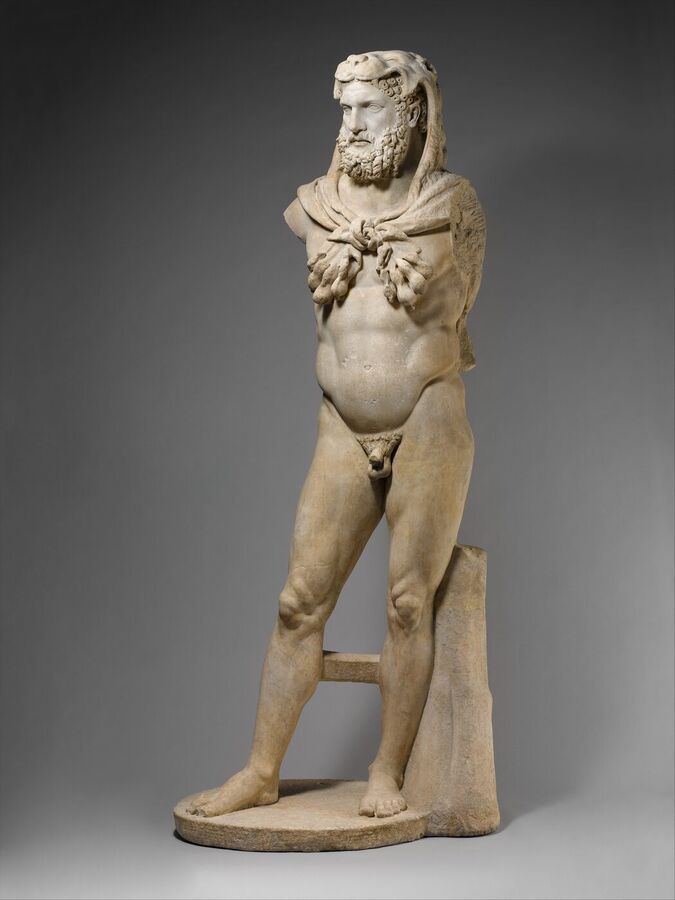
In Athens the pictures were painted inside wine cups, for the eyes of men at a party. Rome put naked gods and athletes in marble in its gardens and baths. For centuries afterwards artists drew the male nude in academies, and early photographers sold "studies for artists" that everyone knew were bought for other reasons.
Then the gatekeepers multiplied. Customs officers sent back a silver cup. Anthony Comstock burned postcards. Physique magazines hid desire behind bodybuilding and fought the post office in court. Stag reels were shown in locked rooms, then gay films filled cinemas for a few bright years, then tapes moved them into the bedroom and websites onto every desk. Each new medium let more people look, more privately, and each time someone tried to close the door again.
The phone finished the journey. For the first time the men in the pictures hold the camera, set the price and choose their partners. And for the first time the gate stands not at the border or the cinema but at the screen itself, asking every viewer for a name, a face or a card.
Who is allowed to look has been the question for two and a half thousand years. It is still open.
- Supreme Court of the United States, Free Speech Coalition, Inc. v. Paxton, No. 23-1122, 606 U.S., 2025
- Mikelle Street, How Sites Like OnlyFans and JustForFans Are Democratizing Gay Porn, Out, 2018
- Josh Schot, The straight men doing gay for pay on OnlyFans and JustForFans, Dazed, 2020
- Michael Lucas Explains His Controversial Decision To Make Condom-Free Adult Films, Queerty, 2014
- Alison J. Rodger et al., Risk of HIV transmission through condomless sex in serodifferent gay couples with the HIV-positive partner taking suppressive antiretroviral therapy (PARTNER): final results of a multicentre, prospective, observational study, The Lancet 393, 2019
- Matthew Terrell, Gay Porn Viewers Hate Condoms, but Performers Sometimes Need Them. So Studios Have Devised a "Magical" Solution, Slate, 2019
- Nicholas Kristof, The Children of Pornhub, The New York Times, 2020
- Mastercard, Protecting our network, protecting you: Preventing illegal adult content on our network, Mastercard, 2021
- LGBTQ sex workers 'in limbo' after OnlyFans policy change, NBC News, 2021
- Arcom, Arcom takes note of Aylo Group's decision, Arcom, 2025
- Autorità per le Garanzie nelle Comunicazioni, Delibera n. 96/25/CONS on age verification for pornographic content, AGCOM, 2025
- Congressional Research Service, The TAKE IT DOWN Act: A Federal Law Prohibiting the Nonconsensual Publication of Intimate Images, LSB11314, 2025