OnlyFans and the creators, the subscription site that made every gay performer his own studio
On 19 August 2021 OnlyFans told its two million creators that sex would be banned from October, and six days later it backed down. The episode showed how much gay performers had come to depend on a London website, and how much that website depended on its banks.
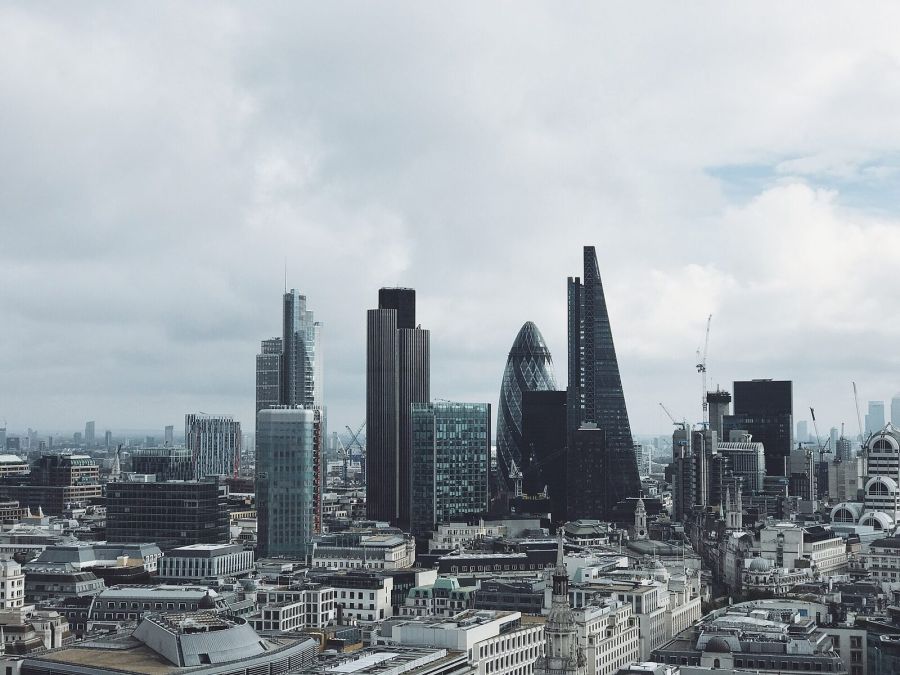
London, 19 August 2021. OnlyFans, the subscription site that has become the biggest shop for porn made by its own performers, emails a statement to the press. From 1 October, it says, creators will no longer be allowed to post sexually explicit content. Nudity can stay; sex cannot. "In order to ensure the long-term sustainability of our platform," the statement explains, "we must evolve our content guidelines." At that moment the site claims more than two million creators, who it says have earned more than five billion dollars, and 130 million users1.
Six days later OnlyFans changed its mind. The episode showed who really held the power over the new economy of porn, and how much gay men in particular had come to depend on it. This is the story of the site, of the gay performers who made it their main stage, of the week in August when it nearly shut them out, and of the fortune it made for its owner.
A loan from a father, a cut of twenty per cent
OnlyFans was founded in London in 2016 by Tim Stokely, then 33, with his father Guy, a former banker, as a director. It was sold in 2018 to the American businessman Leonid Radvinsky for a sum that was never disclosed2.
The model has hardly changed since. A creator sets a monthly price, fans subscribe, and the creator can sell extra videos by private message and receive tips. OnlyFans keeps 20 per cent and passes on 80. By 2023 the money from tips and pay-per-view messages had overtaken subscriptions as the platform's biggest source of income2.
The site was not built for porn, and its owners rarely said the word in public. But it was porn that made it grow, and the pandemic year of 2020, when studios stopped shooting and millions were stuck at home, turned it into a household name.
The studio in the bedroom
Gay performers were among the first to see what the site could do. In October 2018 Out magazine described how they worked: build a following on Twitter with free clips, then send it to a paid page. A performer called Griffin Barrows had posted a 40-minute scene on Twitter in November 2017 that was viewed 3.9 million times. Another, a 23-year-old from Philadelphia known as Macho, started by charging 7.99 dollars a month and raised his price to 253.
The money was new for the gay business. A typical page on JustFor.Fans, the gay-run rival site, cost about ten dollars a month, and an average performer there, with 100 to 300 fans, could earn between 700 and 2,100 dollars a month. The best earned tens of thousands. Rocco Steele, a studio star since 2014, said his fan page paid "unbelievably more" than studio work ever had3.
The studio owner Dominic Ford, who had founded JustFor.Fans in 2018, explained the shift: the studios, he said, had stagnated "while amateur porn really has taken off"3.
Six days in August
The trouble came from outside. In the spring of 2021 a BBC investigation accused the site of failing to keep underage users out, while the company was looking for investors at a valuation of more than a billion dollars1. In August a group of members of the United States Congress asked the Justice Department to investigate it. Then came the statement of 19 August.
Creators were sent the details. Under a new acceptable use policy, existing content that broke the rules would have to be removed before 1 December 20215.
The anger was immediate, and gay creators were among the loudest. For many LGBTQ performers OnlyFans had become the main source of income during the pandemic, and some reported losing subscribers within days of the announcement as fans assumed the pages were finished6.
On 24 August Tim Stokely, by then the chief executive, told the Financial Times who was to blame. Not the card companies, he said, but the banks: BNY Mellon had flagged and rejected transfers, the British Metro Bank had closed the company's accounts in 2019, and JPMorgan Chase was "particularly aggressive in closing accounts of sex workers or... any business that supports sex workers"6.
Not everyone celebrated. One creator told CNN that the word "suspended" worried her: a suspension, she said, only puts a decision off5.
The ban never came back. But the week had made a point that every creator understood: their income depended less on their fans or their platform than on the banks that moved the money.
Billions through a paywall
The accounts of Fenix International, the company behind OnlyFans, are filed in London and show the scale of what followed. In the year to 30 November 2023 users spent 6.6 billion dollars on the site. OnlyFans' own revenue was 1.3 billion, its pre-tax profit 658 million, and it paid 149 million dollars in British corporation tax2.
The number of creator accounts passed four million, and fan accounts reached 305 million. Radvinsky took a dividend of 472 million dollars that year, bringing his payouts since 2020 to just under 1.3 billion2.
The growth continued. In the year to November 2025, according to accounts reported in 2026, revenue rose to about 1.6 billion dollars and pre-tax profit to 715 million, while creators received around 6.2 billion7.
Those totals hide very unequal earnings. By most accounts a small number of creators with large followings take a large share of the money, and most accounts earn little. For gay performers the site works best as one part of a business that also includes social media, collabs and, for some, studio work.
After Radvinsky
On 23 March 2026 OnlyFans announced that Leonid Radvinsky had died after a long illness with cancer, at the age of 43. He had owned the company since 2018 and had turned it into one of the most successful tech start-ups in Britain8.
Control passed to a family trust. In May 2026 the company sold a stake of about 16 per cent to the American investment firm Architect Capital for 535 million dollars, a deal that valued OnlyFans at around 3.15 billion, while leaving control with the trust9.
The site had also learned to live with the regulators. It checks the identity of every creator with official documents and a selfie before anything is posted, and as age verification laws spread through American states and Europe it began asking viewers in some countries to prove their age as well.
What it changed
For a century gay porn had been made by somebody else: the photographer with a studio, the producer with a mailing list, the company with a contract and a house style. OnlyFans and its rivals gave the camera and the price to the performer. A man with a phone and a following could now be his own studio, his own distributor and his own publicist.
The six days of August 2021 showed the limit of that freedom. The performers owned their pages, but not the pipes the money ran through. The wider story of the performers, the platforms and the laws of the last decade is told in the chapter on the creator economy.
- Kim Lyons, OnlyFans to prohibit sexually explicit content beginning in October, The Verge, 2021
- Dan Milmo, OnlyFans owner paid £359m dividend as company's revenues grow 20% in a year, The Guardian, 2024
- Mikelle Street, How Sites Like OnlyFans and JustForFans Are Democratizing Gay Porn, Out, 2018
- Mikelle Street, Gay OnlyFans Performers Are Making $100,000 for Their Clips and Pics, Out, 2019
- Brian Fung and Sara Ashley O'Brien, OnlyFans suspends proposed ban on sexually explicit content, CNN Business, 2021
- Rhuaridh Marr, OnlyFans scraps ban on sexually explicit content after outcry, Metro Weekly, 2021
- OnlyFans' Billionaire Owner Received $700 Million Dividend Months Before Death, Forbes, 2026
- OnlyFans Owner Leonid Radvinsky Dies of Cancer at 43, U.S. News & World Report, 2026
- OnlyFans sells 16% stake for $535 million, Axios, 2026