Vada
Polari for to look or to see, as in "vada the omi": one of the core words of the old British gay slang, from Italian by way of 19th-century street slang.
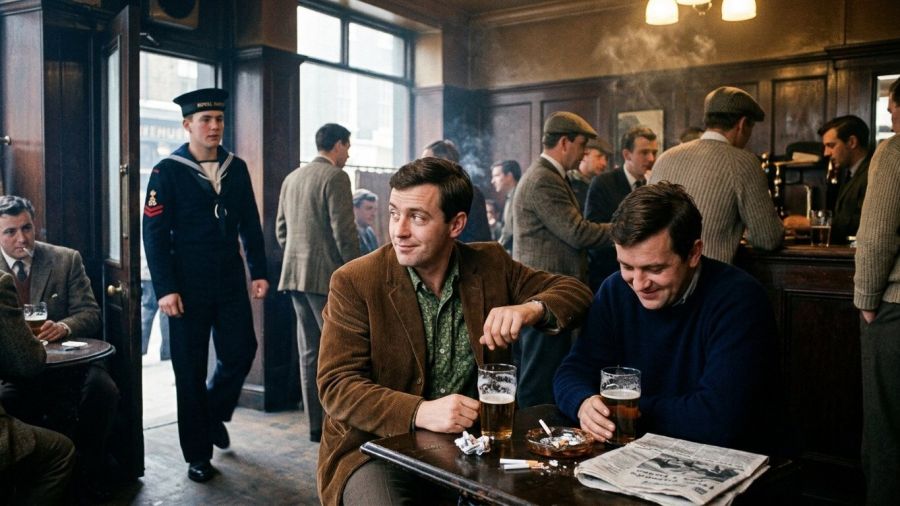
Vada is Polari for "to look" or "to see". You vada a handsome omi across the bar, you tell your friend to vada the lallies on that one, and you have a vada, a good look, at anything worth seeing. It is one of the core verbs of Polari, the secret slang of British gay men, and it was built for the most important activity in any gay bar: checking people out without getting caught.
Spellings wander, as they always do in a spoken slang: varda, vardy, vardo and vada all turn up.
Where it comes from
Vada is far older than gay Polari. Green's Dictionary of Slang finds vardo, "to look", in John Camden Hotten's slang dictionary of 1859, and Henry Mayhew heard it among London's street traders in the 1840s and 1850s. Like much of Polari, it comes from an older layer of street and traveling slang that mixed cant, rhyming slang, backslang and Italian.
The root is Italian, but which word is disputed. Green's gives the Venetian vardia, a look; others, including Eric Partridge, pointed to vedere, to see; one Polari scholar argued that guardare, to look at, fits the form better. Either way, it was looking at people on London streets long before it reached a gay pub.
Julian and Sandy, and after
Vada got its national moment on BBC radio. In Round the Horne, in the mid-1960s, Julian and Sandy, played by Hugh Paddick and Kenneth Williams, greeted their visitors with "bona to vada your dolly old eek": lovely to see your nice old face. A huge audience laughed without knowing exactly why, and gay listeners laughed twice.
Polari also coined vadavision, or vardavision, for a television, a lovely example of how speakers kept the language alive by stretching it to modern things.
How it is used today
Vada is one of the Polari words that survived best, together with bona. Paul Baker notes that gay businesses have taken their names from exactly these core words, bona and vada. You still hear it in camp banter, usually as a theatrical "vada that!" when someone walks in looking spectacular, and occasionally on the apps from men who like a bit of history with their flirting.
Related terms
Sources 2
- Baker, Paul. "Polari: The Lost Language of Gay Men." Lancaster University, Linguistics and English Language (accessed 19 October 2026). https://lancaster.ac.uk/staff/bakerjp/polari/home
- Green, Jonathon. "varda, v." Green's Dictionary of Slang, online edition. https://greensdictofslang.com/entry/6f4izsq