Al Parker, the clone superstar who became a producer and a voice for safer sex
A medical student from Massachusetts drove to Los Angeles in a hearse, worked as a butler at the Playboy Mansion and became Al Parker, the bearded face of gay porn's clone era. After AIDS killed his partner, he told an industry that did not want to listen that its men had to wear condoms.

Hermosa Beach, California, September 1986. On a Friday a forty-six-year-old man called Richard Cole is diagnosed with AIDS pneumonia. On Tuesday 9 September he dies in the arms of his lover. The short notice in the Bay Area Reporter adds one line for readers who might not recognise the name: in the gay film industry he was known as Steve Taylor1.
The lover was Al Parker, the most famous gay porn star of his generation, and for some thirteen years the two men had shared a house, a business and a career. This page tells how a medical student from Massachusetts became the bearded face of the clone era, how he and Taylor built their own studio, Surge, and how after Taylor's death he spent the rest of his short life telling an industry that did not want to hear it that its men had to wear condoms.
A hearse to Los Angeles
Al Parker was born Andrew Robert Okun on 25 June 1952 and grew up in Natick, Massachusetts. His friends called him Drew. He went to Boston University to study medicine, then changed his mind and drove across the country in a black 1956 hearse to study filmmaking in Los Angeles2.
He settled first in Redondo Beach, on the coast south of the city, and pumped petrol to pay the rent. His next job was in the household of Hugh Hefner, as a butler at the Playboy Mansion West. His biographer Roger Edmonson notes that almost all the butlers there were gay3.
One Sunday afternoon, cycling along the ocean, he met Richard Cole, a veteran more than ten years older than him. They became lovers almost at once, and stayed together until Cole's death, thirteen or fourteen years by different counts. The relationship was open, as many gay couples' were at the time, and Cole, in the words of a review of Edmonson's biography, was as much mentor as lover4.
A name from Colt
Cole steered Okun into modelling and films. The decisive meeting was with Jim French, the founder of Colt Studio, who photographed him under his pseudonym Rip Colt and gave him a new name: Al Parker. Okun never really liked it, his friends later wrote, but he knew it fitted him like a glove2.
His first films were short 8mm loops for Brentwood Studios. The feature that made him famous was Inches (1979), and he also appeared in Falcon's The Other Side of Aspen (1978), the first gay feature released on videocassette3.
His look matched the moment. Short hair, a full beard, a gym-built but not enormous body: he was the clone of the Castro and Christopher Street, the hyper-masculine style that the sociologist Martin P. Levine described as gay men's answer to the old stereotype of the effeminate homosexual5. Edmonson's point was that Parker did not invent the look, but he gave it a public face and body that ordinary men could actually copy4.


Surge, with a borrowed camera
Parker did not want to be exploited by other producers. He and Cole tried to borrow money to open their own production company, and nobody would lend it. So they started with a borrowed camera and their friends as models, and in 1980 founded Surge Studio2.
The division of labour was clear. Parker was the star and later the director. Cole, who appeared on screen as Steve Taylor, ran the business and took the still photographs, often without credit, and according to Edmonson it was his business sense that made both Surge and Al Parker profitable4. Many of the films were shot at their home in Hermosa Beach.


Surge made features with stories, not just loops: Wanted (1980), Flashback (1981), Turned On (1982), Therapy and later Oversize Load (1986), which Parker directed and in which he only made a brief appearance3. In 1984 he summed up his position to the magazine Mandate with a joke: he saw himself as a cult hero, which, he explained, meant an insolvent movie star6.
The year everything changed
By the mid-1980s the epidemic was killing the men of Parker's world: the bathhouse regulars, the bar crowds, the performers. In September 1986 it killed Richard Cole, four days after his diagnosis1.
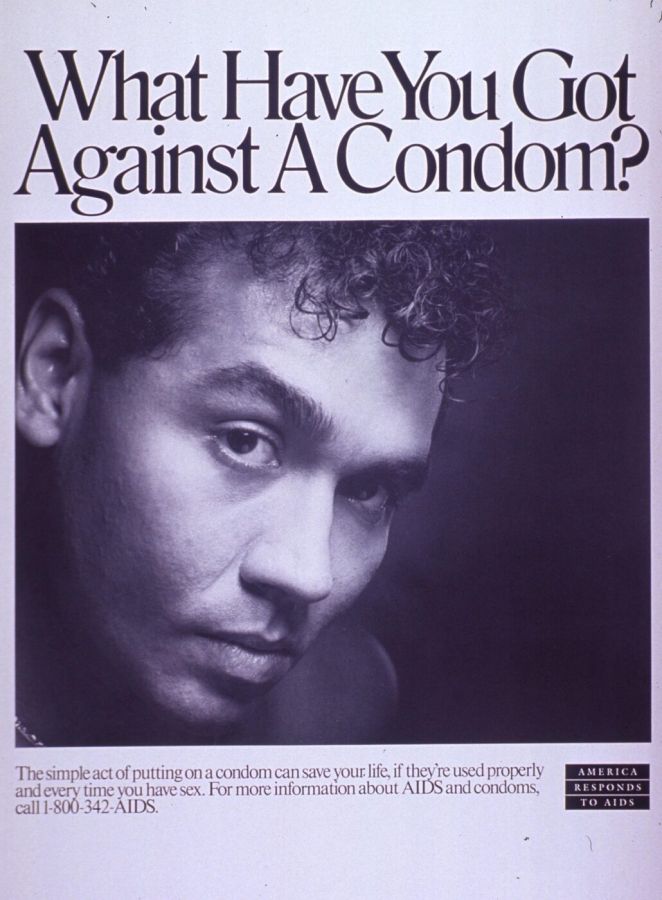
Parker was devastated, and his interest in the studio faded for a time. When he came back, he came back with a cause. In an interview in 1987 he attacked the gay adult film industry for doing nothing while its performers were dying, and according to Edmonson he became one of the first producers to insist that the men in his films wear condoms3.
His friends remembered the stance as absolute. He refused to make any video in which someone's health or life would be put at risk, and said that if he had to make unsafe videos to survive in the business, he would get out of it. The position was financially devastating, they wrote, but it earned him great respect2.
Condoms on the menu
It was not a popular position. Many producers believed that condoms broke the fantasy and would hurt sales, and some of the biggest studios held out until the end of the 1980s. Parker's films showed that a star could wear one and still be Al Parker.
By the early 1990s the condom had become standard in American gay porn, studio by studio, without any law requiring it. Jeffrey Escoffier, the historian of gay porn cinema, describes condoms in the gay films of the 1990s as simply de rigueur7. A review of Edmonson's biography credits Surge's example with persuading other studios to provide condoms for their performers4.
A house on a hill
In 1988 Parker moved to San Francisco and bought a house high on a hill overlooking the city with a friend, Keith Reiter. He kept making videos and appearing in the press, now as a producer and an advocate as much as a star2.
Al Parker died in San Francisco at ten in the morning on Monday 17 August 1992, of complications from AIDS. He was forty2.
His friends wrote the obituary themselves. Surge Studio would carry on, they announced, with all the profit from the stock on hand going to the brunches that the entertainer Rita Rockett served to patients on Ward 5A, one of the AIDS wards of San Francisco General Hospital. During the weekend of the Folsom Street Fair the house was opened so that people could come, see his art and his belongings, and sign the guest book2.
Clone, the biography
In 2000 Alyson Books published Roger Edmonson's biography, Clone: The Life and Legacy of Al Parker, Gay Superstar. Edmonson, who had already written the life of Casey Donovan, based it in part on Parker's own unpublished autobiography, titled Stranger Than Fiction: Like Beethoven Going Deaf4.
The films have found new audiences too. In September 2024 the San Francisco record label Dark Entries showed Turned On at the 4 Star Theater in the city, alongside a reissue of its electronic score by Man Parrish, recorded under the name Forbidden Overture8.
Parker lived just long enough to see the condom become normal on the sets he had fought over. The story of the studios where he started is told in the chapter on the studio age, and the epidemic that killed him and his partner in the chapter on the AIDS years.
- Richard Cole (obituary), Bay Area Reporter 16 (38), 1986
- Keith Reiter, Al Parker (obituary), Bay Area Reporter 22 (35), 1992
- Roger Edmonson, Clone: The Life and Legacy of Al Parker, Gay Superstar, Alyson Books, 2000
- Jesse Monteagudo, Clone: The Life and Legacy of Al Parker Gay Superstar (review), Gay Today, 2000
- Martin P. Levine, Gay Macho: The Life and Death of the Homosexual Clone, New York University Press, 1998
- Brian Ferrari, Al Parker: In His Own Words, brianferrarinyc.com, 2026
- Jeffrey Escoffier, Bigger Than Life: The History of Gay Porn Cinema from Beefcake to Hardcore, Running Press, 2009
- 4 Star Theater, Dark Entries presents Turned On, event listing, 2024