L.A. Plays Itself, Fred Halsted's 1972 film, now in the Museum of Modern Art
A self-taught gardener spent three years filming sex in the canyons and streets of Los Angeles, and in 1972 put the first fisting scene in cinema into gay adult theatres. Two years later the Museum of Modern Art screened L.A. Plays Itself to a full house and kept the prints.
New York, April 1974. The Museum of Modern Art is showing two films by a Los Angeles director in Cineprobe, the series in which its curators present independent filmmakers in person. Before Fred Halsted it has hosted names like Stan Brakhage and Hollis Frampton. Outside, protesters hand out leaflets attacking the museum for sticking "the pretentious label of Art" on pornography. Inside, the hall is full, and according to Halsted's biographer the audience includes Groucho Marx1.
One of the two films was L.A. Plays Itself, an hour of sex between men in the hills and streets of Los Angeles that had opened in gay cinemas two years earlier. It was the first film to show a man being fisted, it was made by a self-taught gardener with no connection to the film industry, and its prints are still in the museum's collection. This is how it was made, what it shows, and how it went from the adult cinema to the archive.
A pervert first
Fred Halsted was thirty-one when the film came out in 1972. He had grown up in California, worked as a gardener and run a plant nursery, and he had never been to film school or worked on a set. He was, in his own words, "a pervert first and a homosexual second"1.
That phrase was a programme. Halsted did not want to make sex look pretty or wholesome, as Wakefield Poole was doing on Fire Island the same year. He wanted to put sadomasochism, cruising and hustling on a screen where people could look at them and think about them1.
He produced it, directed it, edited it and appeared in it, and he made no secret that it was drawn from his own life. The film historian Jeffrey Escoffier treats him as the first real auteur of gay porn, a director whose films could not be mistaken for anyone else's2.
Three years in a vanishing city
Halsted shot L.A. Plays Itself over about three years, in what his biographer William E. Jones calls a now-vanished Los Angeles, a city "at once rural and sleazy"3.
There was no script to speak of. The Museum of Modern Art that now holds the film describes it as built almost entirely in the editing room: an elliptical, almost plotless film that opens on the sign marking the Los Angeles city limits and then moves from the natural world into the city4.
The title says what the film is about. Los Angeles is not a backdrop but the subject, and the two halves of the film are two faces of the same place.
The canyon
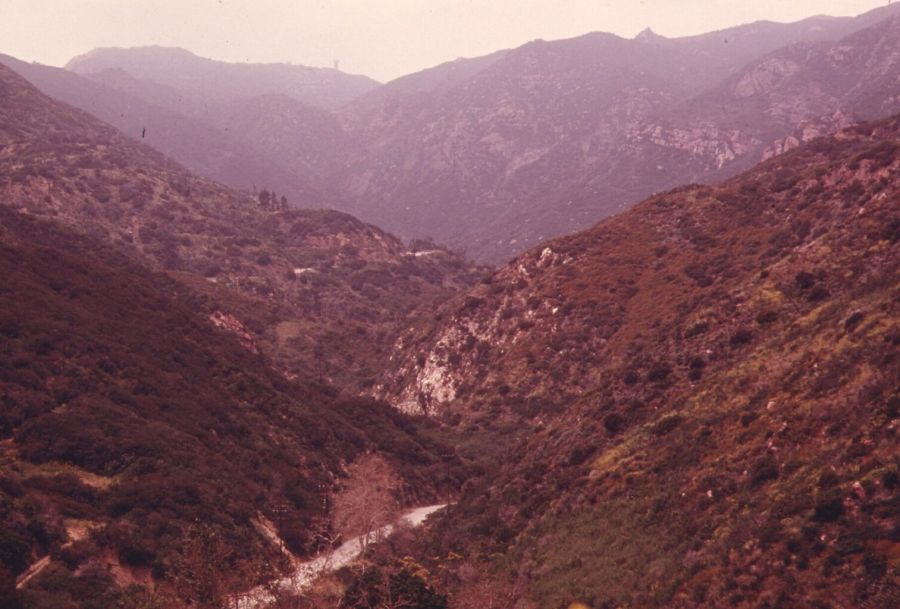
The first half is a pastoral. In the canyons of the Santa Monica Mountains above Malibu, among the scrub and the streams, two young men credited as Jim Frost and Rick Coates find each other and have sex in the open air4.
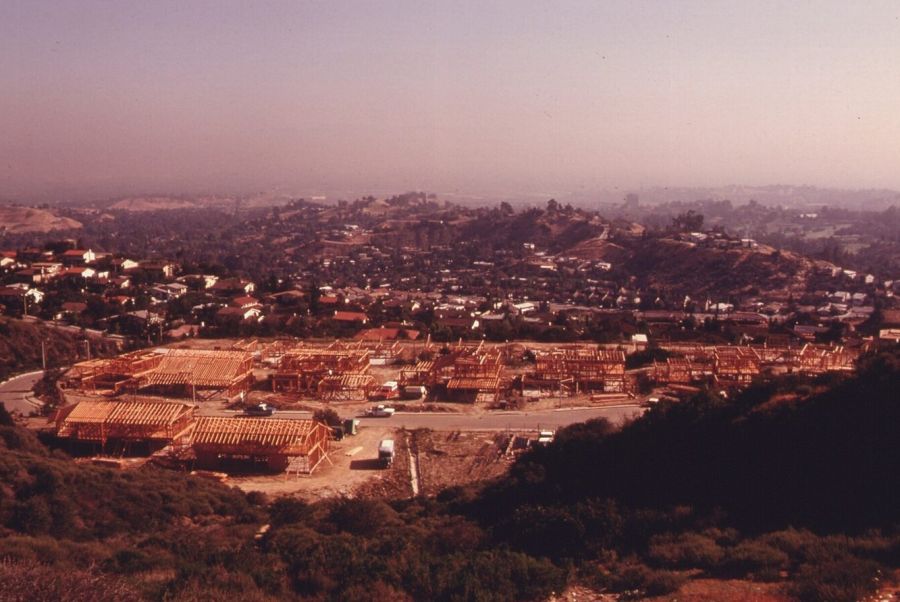
Then the machines arrive. Bulldozers cut into the hillside, and the idyll is literally flattened. In the early 1970s new roads and housing estates were climbing into those same hills, and the image needed no explanation for an audience in Los Angeles.
The street
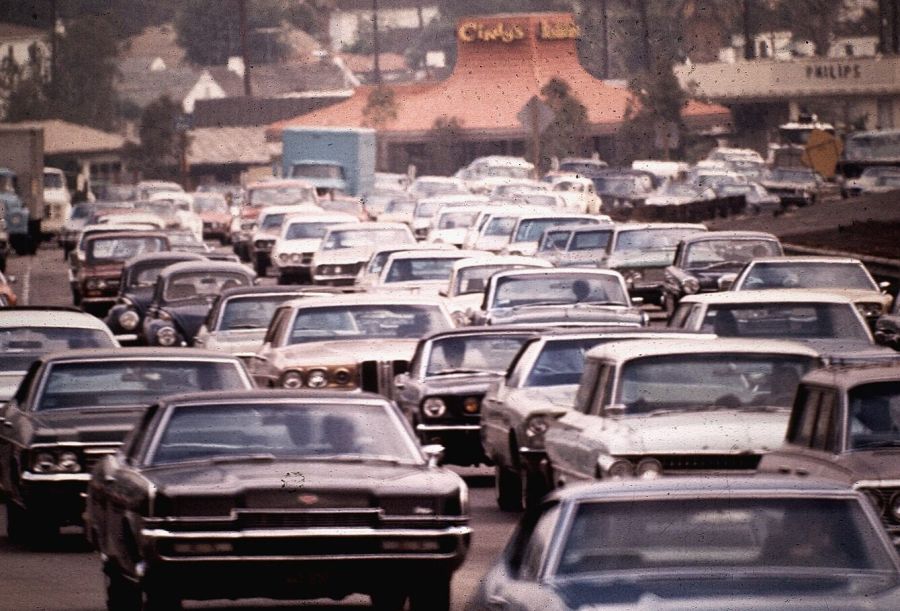
The second half is the city at ground level. Halsted plays a man driving through Los Angeles who picks up a young man just arrived from Texas, and the film follows them through the streets, the cruising grounds and the bedroom, from hustling to sadomasochistic sex1.
His partner on screen was Joey Yale, his lover in life. The sequence ends with the first fisting ever shown in a film, the scene that made L.A. Plays Itself notorious and that the film builds towards as its climax4.
The contrast is the argument. The country is soft, sunlit and doomed; the city is hard, dangerous and alive, and Halsted clearly prefers it.
From Hollywood to 55th Street
The film opened in Los Angeles in the spring of 1972, at the Paris Theater, and soon moved to New York, to the 55th Street Playhouse, the art cinema where Boys in the Sand had started its run a few months before1.
It was a hit in the gay cinemas and an event among artists and critics. Jones reports that Jonas Mekas, the champion of underground film, wrote in The Village Voice that it might be the beginning of pornographic cinema as art1.
At one New York screening Salvador Dalí was heard muttering, again and again, "new information for me"3.
Into the museum
The Cineprobe evening of 1974 was arranged by the museum's film curators Adrienne Mancia and Laurence Kardish, who put Halsted's hardcore films in the same series as the avant-garde. After the screening the museum acquired prints, and Jones writes that it holds Sextool (1975) as well as the two films of 19721.
They are usually described as the only gay porn films in the collection of the Museum of Modern Art, a distinction that has followed L.A. Plays Itself into every retrospective since.
A good life, and an ending
Halsted never had another success like it. Sextool, shot on 35mm in the hope of crossing over to art cinemas, did not1. The commercial gay porn of the late 1970s and 1980s, with its studios and contract stars, left little room for a director who wanted to make films about the world2.
Joey Yale died of AIDS in 1986, and Halsted took his own life in 1989, at forty-seven3. In the note he left he wrote that he had had a good life, with looks, money, success, artistic triumphs and the love of his life, and that he saw no reason to go on1.
His work came back slowly. Jones's book Halsted Plays Himself appeared in 2011 and was revised in 2022 with new material on the restoration and new testimony from Halsted's family3. At the end of 2021 the distributor Altered Innocence released the museum's restorations on disc, uncut for the first time, together with Halsted's lost second feature, Truck It5.
Half a century on, L.A. Plays Itself is still a hard film to watch and an easy one to admire: a portrait of a city and of a desire, signed by the man who lived both. The wider story is told in the chapter Out on the screen.
- William E. Jones, Halsted Plays Himself, Semiotext(e), 2011
- Jeffrey Escoffier, Bigger Than Life: The History of Gay Porn Cinema from Beefcake to Hardcore, Running Press, 2009
- William E. Jones, Halsted Plays Himself, Revised and Expanded Edition, Semiotext(e), 2022
- The Museum of Modern Art, The Sex Garage and L.A. Plays Itself, screening notes, The Museum of Modern Art, 2020
- L.A. Plays Itself: The Fred Halsted Collection, Blu-ray and DVD, Altered Innocence, 2021