Pasolini's Trilogy of Life, the Decameron, the Canterbury Tales and Arabian Nights, and the male nudity Italy put on trial
Between 1971 and 1974 Pier Paolo Pasolini filmed Boccaccio, Chaucer and the Thousand and One Nights with non-professional actors, naked men and women and prizes from Berlin and Cannes, and Italy answered with complaints, seizures and trials. Then the imitations turned his bodies into soft porn, and a few months before he was killed he disowned the whole trilogy.
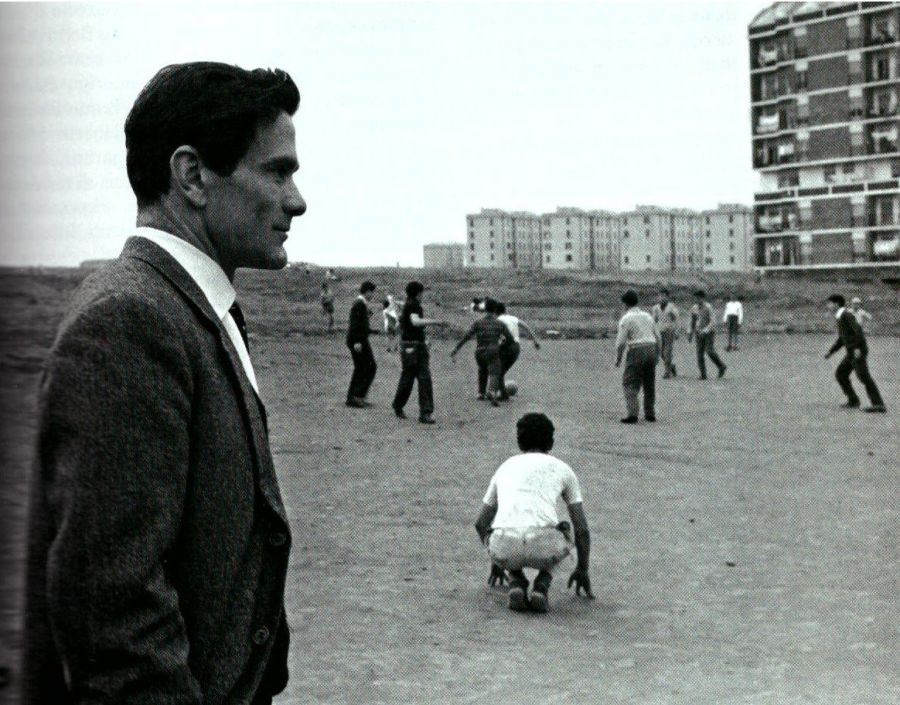
Benevento, 2 September 1972. In the Cinema Comunale of a small city in Campania, Pier Paolo Pasolini's I racconti di Canterbury (The Canterbury Tales) has its Italian premiere, forbidden to anyone under eighteen. Two months earlier the film had won the Golden Bear in Berlin. Within days a spectator from Naples walks into the public prosecutor's office and files a complaint for obscenity. Eight more complaints follow from other Italian cities, and because the film was first shown in Benevento, all of them land on the desk of its prosecutor1.
The complaint was about bodies. Pasolini's Trilogy of Life, Il Decameron (1971), I racconti di Canterbury (1972) and Il fiore delle Mille e una notte (Arabian Nights, 1974), showed men and women naked, frontally and without apology, at a time when even art cinema rarely let the camera rest on a man. This page tells how the three films were made, how Italy put them on trial, how they launched a wave of soft porn, and why their author disowned them a few months before he was killed.
A poet looking for faces
By 1970 Pasolini was the most argued-about intellectual in Italy: poet, novelist, essayist, Marxist, openly homosexual and a film director since Accattone (1961). His early films had been set in the borgate, the poor outskirts of Rome, and cast with the young men he found there rather than with trained actors2.
The Trilogy of Life took that habit to the Middle Ages and the medieval East. Pasolini chose three great collections of stories, Giovanni Boccaccio's Decameron, Geoffrey Chaucer's Canterbury Tales and the Thousand and One Nights, and treated them as a celebration of a world before consumer society, where sex was still, in his view, something innocent and shared3.
His faces came from the street. At the centre of all three films is Ninetto Davoli, a Roman boy from a working-class family whom Pasolini had met in 1963 and who appeared in most of his later films. Davoli was by now in his twenties, with a grin and a loping walk that Pasolini used as a kind of signature4.
Naples instead of Florence
Il Decameron had its premiere at the Berlin film festival on 29 June 1971 and won the Silver Bear, the jury's special prize. Pasolini moved Boccaccio's Florentine storytellers to Naples and the south, had the cast speak Neapolitan dialect, and filmed in Naples, Ravello and Caserta Vecchia3.
He picked ten of the hundred tales, the ones about tricks, lust and money. Davoli plays Andreuccio of Perugia, the horse dealer robbed in Naples who ends up locked in a bishop's tomb. Franco Citti plays the swindler Ciappelletto. Pasolini himself appears as a pupil of Giotto, painting a fresco and wondering, in the film's last line, why create a work of art when it is so much nicer to dream it.
The tale everyone remembered was Masetto's: a young gardener pretends to be deaf and dumb to get work in a convent, and the nuns, one after another, take him to bed. Pasolini filmed it as a farce in the sunshine, and the naked bodies, his and theirs, are shown as plainly as the bread and the fruit in the same scenes2.

The audience loved it. Il Decameron sold more than eleven million tickets in Italy and was one of the biggest hits of the 1971 to 1972 season, an extraordinary result for a film in dialect, with non-professional actors, by a poet3.
Chaucer in a monk's habit
I racconti di Canterbury was shot in England in the autumn of 1971 and premiered in Berlin on 2 July 1972, where it won the Golden Bear. Even the festival later admitted the prize came in a weak year, and critics usually call it the weakest film of the trilogy3.
The cast mixed professionals and amateurs: the Welsh actor Hugh Griffith as the old husband January, Laura Betti as the Wife of Bath, Josephine Chaplin, and a young Tom Baker as Jenkin, the Wife of Bath's young husband. Davoli plays Perkin, an idle London apprentice, in a turn openly modelled on Charlie Chaplin. Pasolini cast himself as Chaucer, at his desk, writing.
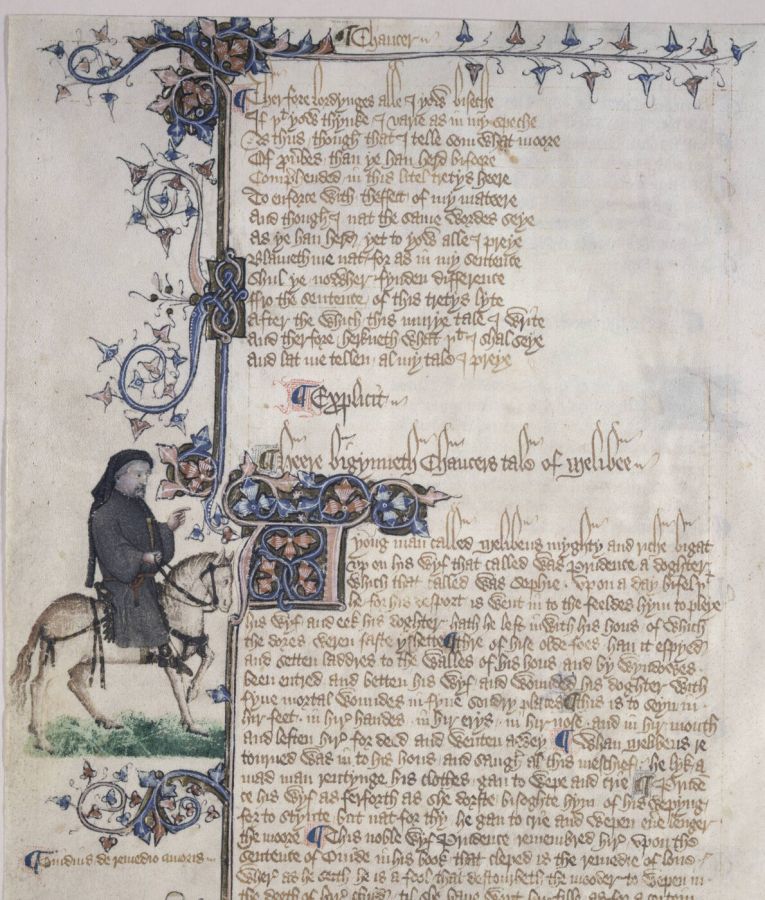
The film is crowded with naked men: young pilgrims, husbands, lovers and students, all shown frontally as if nudity were the most ordinary costume in the Middle Ages. It ends in hell, with a scene from the Summoner's prologue in which a giant devil expels a stream of friars from its backside, a joke straight out of Chaucer that did nothing to calm Italy's prosecutors2.
Bodies without sin
Il fiore delle Mille e una notte was the longest and most ambitious of the three. Pasolini shot it in Yemen, Iran, Nepal, Ethiopia and Eritrea, among the tower houses of Sana'a and Shibam and the mosques of Isfahan. It premiered at Cannes on 20 May 1974 and won the Grand Prix Spécial du Jury3.
The lead, Nur-ed-Din, was played by Franco Merli, a Roman discovered working at a petrol station. Born in 1956, he was seventeen when he was cast in 1973. Davoli plays Aziz, Citti a demon, and Ines Pellegrini the slave girl Zumurrud, who ends the film disguised as a king. Pasolini had the whole cast dubbed afterwards, choosing voices from the Salento in the far south of Italy because the accent seemed to him close to Arabic.
This was the film in which the trilogy's nudity was most open, for men as much as for women, and the least punished. A citizen in Milan reported it for obscenity. On 5 August 1974 the Milan prosecutor's office closed the case, describing the film as a work of good quality and its sensuality as free from the idea of sin of the Christian tradition1.
Nine complaints and a judge in Benevento
Pasolini was used to courtrooms. By the time he died he had faced, by the usual count, thirty-three legal proceedings in about twenty-five years, for his novels, his films and his life, and he was never definitively convicted1.
Il Decameron was reported, seized, released and tried. According to the Italian press, it was judged four times on charges of obscenity and acquitted every time, though some prints went out with the most erotic parts trimmed1.
The Canterbury case went furthest. On 20 October 1972 the Tribunal of Benevento, presided over by Daniele Cusani, acquitted Pasolini, his producer Alberto Grimaldi and the other defendants on the grounds that the act was not a crime. The judges called the film a work of art. The case did not end there. The film was seized again in 1973 while it moved through the higher courts, and the Court of Cassation finally cleared Pasolini and the other defendants in December 19731.
Fifty Decamerons
The trilogy made money, and Italian producers noticed. From 1972 a flood of cheap imitations appeared, costume comedies of friars, nuns, cuckolded husbands and willing wives, with as much nudity as the censors would pass. They came to be called decamerotici, a pun on Decameron and erotic.
About fifty were made between 1972 and 1976, more than thirty of them in 1972 alone. The titles tell the story: Le calde notti del Decameron, Racconti proibiti... di niente vestiti, Le mille e una notte all'italiana (all 1972) and Canterbury n° 2 (1973). Directors included Mino Guerrini, Mariano Laurenti and Joe D'Amato.
The decamerotici belong to the larger family of the commedia sexy all'italiana, the soft porn comedies that filled Italian cinemas in the 1970s. Pasolini watched his innocent bodies become a formula for selling tickets with breasts and bottoms, and according to his critics and biographers he came to feel that the imitations had poisoned the originals3.
I abjure
On 15 June 1975 Pasolini wrote a short essay, the "Abiura dalla Trilogia della vita". It begins: "I abjure the Trilogy of Life, although I do not repent having made it." He explained that he had wanted to show the innocent bodies of the poor, with the archaic violence of their sexual organs, as the last stronghold of reality5.


Now, he wrote, even that reality had been manipulated by consumer power, and sexual liberation had become a new obligation sold by the market. He went as far as to say that he now hated the bodies and sexual organs of the new young Italians. The essay was published only after his death, in the Corriere della Sera on 9 November 1975, and later in his collection Lettere luterane5.
His answer on film was Salò, o le 120 giornate di Sodoma, which moved the Marquis de Sade to the last months of Mussolini's Republic of Salò. Four powerful men lock a group of young prisoners in a villa and subject them to rules, humiliation and torture. The naked body, celebrated in the trilogy, became something owned and destroyed by power2.
The film had its premiere at the Paris film festival in November 1975, three weeks after its director's death. In Italy it was released in January 1976 and seized within weeks, and Grimaldi was put on trial for obscenity once again4.
Ostia, 2 November 1975
In the early hours of 2 November 1975, Pasolini was beaten and run over with his own car on waste ground at the Idroscalo of Ostia, near the mouth of the Tiber. He was fifty-three. Giuseppe Pelosi, a seventeen-year-old who was stopped that night driving Pasolini's car, was convicted of the murder6.
The court of first instance said Pelosi had not acted alone; the appeal court said he had. In 2005 Pelosi retracted his confession and said others had killed Pasolini, and the case has been reopened and closed again since without a final answer.

The three films he renounced outlived him. They are still shown, restored and argued over, and they remain one of the few places where 1970s cinema looked at the naked male body with the same calm it gave to the female one, in the same years when Alan Bates and Oliver Reed wrestled by the fire in Women in Love and gay hardcore was leaving the peep booth for the cinema. The wider story of those years is told in the chapter on Out on the screen.
- Laura Betti (ed.), Pasolini: cronaca giudiziaria, persecuzione, morte, Garzanti, 1977
- Naomi Greene, Pier Paolo Pasolini: Cinema as Heresy, Princeton University Press, 1990
- Patrick Rumble, Allegories of Contamination: Pier Paolo Pasolini's Trilogy of Life, University of Toronto Press, 1996
- Barth David Schwartz, Pasolini Requiem, Pantheon Books, 1992
- Pier Paolo Pasolini, Lettere luterane, Einaudi, 1976
- Enzo Siciliano, Vita di Pasolini, Rizzoli, 1978