Pride
The opposite of shame: being openly and unapologetically gay, and the marches and parties that celebrate it every June since the first one in 1970.
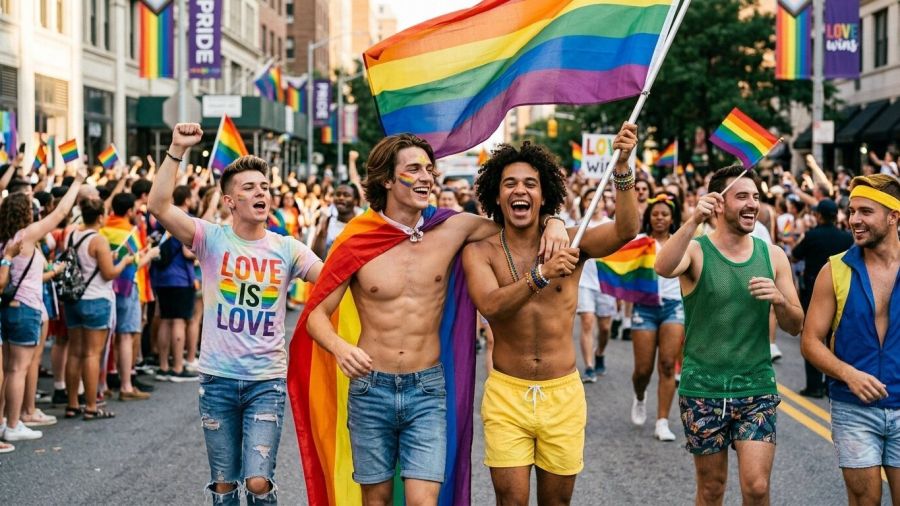
Pride is two things at once: the feeling of not being ashamed of who you are, and the events where we show it in public, the marches, parades, parties and weekends that fill June and much of the summer. When a gay man says "are you going to Pride?" he means the second. When he says "I came out late, but now I'm proud" he means the first, and the second exists because of it.
The word is deliberately the opposite of shame. For most of the 20th century being gay was something to hide, deny or apologize for; Pride turns that upside down and does it in the street, in daylight, often in very little clothing.
Where it comes from
Pride grew out of protest. From 1965 to 1969 a small group of gay and lesbian activists picketed Independence Hall in Philadelphia every Fourth of July, asking for equal rights. Then came Stonewall: in June 1969 a police raid on a gay bar in Manhattan turned into an uprising, and the movement stopped asking politely.
A year later, on June 28, 1970, the first march in New York, called Christopher Street Liberation Day, marked the anniversary, with an estimated three to five thousand people. That is why Pride is in June, and why many cities still march on the last weekend of the month.
How it is used today
Today Pride is everywhere, from small towns to capital cities, and every year the same argument comes back: is it a protest or a party? The honest answer is both. The floats sponsored by banks and the circuit parties sit next to marches in countries where it can still get you arrested, and plenty of us remember that the first Pride was a riot.
The vocabulary has grown with it: Pride Month for June, Pride flag for the rainbow flag and its newer versions, Pride season for the summer circuit of cities. The symbols carry the history too: the pink triangle, once a badge of persecution, now turns up on banners as a sign of survival.
For many men the first Pride is where coming out stops being private. Walking down a main street with thousands of other gay people does something no conversation can, and it is why Pride still matters to the guy in the crowd who thinks he is too old, too shy or not gay enough to be there.
Related terms
Sources 1
- Library of Congress. "Lesbian, Gay, Bisexual and Transgender Pride Month: About." loc.gov (accessed 19 October 2026). https://www.loc.gov/lgbt-pride-month/about/